
Mastering China Color Masterbatch: Trends, Innovation, and Market Insights
2026-07-19
As global industries chase high-performance and sustainable color solutions, China’s color masterbatch sector is undergoing a quiet revolution. From automotive plastics to smart packaging, the demand for precision hues and eco-friendly additives is reshaping what’s possible. At the heart of this shift is Xinwancai — a name that’s redefining innovation with every batch. In this post, we’ll unpack the latest trends, breakthrough innovations, and what they mean for your next project.
China's Color Masterbatch Arena: A Portrait of Shifting Demand
Walk through any plastics trade show in China these days, and the chatter isn't just about volume anymore—it's about value. The color masterbatch sector, once a straightforward supplier of pigment-loaded pellets, now finds itself pulled in a dozen directions by customer whims and regulatory winds. Automotive interiors demand matte finishes that don't scuff under ten thousand touches; packaging lines want metallic effects that sparkle on a supermarket shelf without migrating into the product. It's a far cry from the era when a handful of standard primary colors could keep a factory humming.
The real twist, though, is happening at the chemical level. Bio-based carriers are quietly edging out conventional polyolefins in premium segments, pushed by brand owners' net-zero pledges rather than plant managers' preferences. A masterbatch that took six months to develop might be shelved overnight because a European buyer updates its restricted substances list. Meanwhile, e-commerce packaging—think those ubiquitous black courier bags—has evolved its own color language: anti-counterfeit grays, temperature-sensitive blues that signal cold chain integrity, even pigments tuned for near-infrared sorting in recycling streams. The arena is no longer just about color; it's about function dressed in pigment.
Smaller players are carving niches by getting hyper-local. A masterbatch designed for fishing net monofilaments in Fujian's humidity won't perform the same in arid Xinjiang's greenhouses—smart labs now simulate regional UV exposure and seasonal temperature swings before shipping a single pellet. And as consumer markets fracture into micro-trends, lead times have compressed brutally. A Shenzhen-based compounder might go from color-matching request to 50-kilogram sample run in under 48 hours, all while navigating a maze of carbon-footprint data sheets. The portrait that emerges is of an industry not just adapting, but actively rewriting the rules of coloration—one custom pellet at a time.
Hotbeds of Ingenuity: Where Tech Meets Commercial Reality
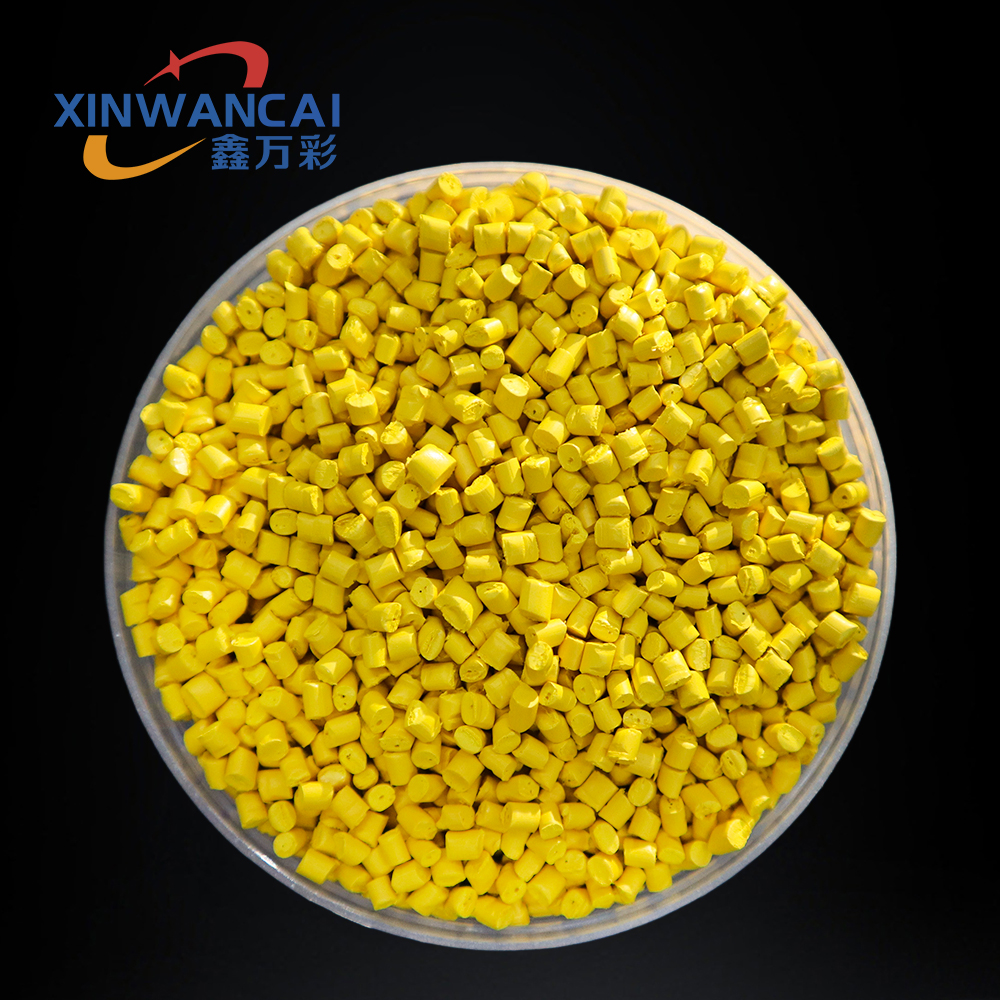
In a handful of places around the world, ideas don’t just stay on whiteboards. They slip out of labs and into factories, markets, and daily life with a speed that feels almost reckless. These clusters—whether a district in Shenzhen or a stretch of California—thrive on a rare alchemy: deep technical talent mixed with a relentless focus on what actually sells. The air buzzes not just with possibility, but with prototypes being tested, iterated, and shipped by Friday.
Take Shenzhen’s Huaqiangbei, where components and know-how collide. Here, a sketch on a napkin can become a working gadget in days, not months. The ecosystem is built on affordable supply chains, a maker culture that prizes speed over polish, and an unspoken acceptance that failure is just a step toward the next version. It’s a place where the line between engineer and entrepreneur blurs, and where commercial reality isn’t an afterthought—it’s baked into every circuit board from the start.
What makes these hotbeds truly tick isn’t just infrastructure, but a mindset that treats technology as a means, not an end. The best innovations emerge when brilliant minds are forced to confront costs, user habits, and distribution channels early in the creative process. It’s messy, iterative, and often unglamorous—but that’s precisely why it works. In these rare corners of the world, ingenuity isn’t celebrated in isolation; it’s measured by what hits the shelves and actually sticks.
The Green Chemistry Pivot: Sustainability as a Core Ingredient
For decades, the chemical industry operated with a straightforward but flawed logic: efficiency and yield above all else. Environmental concerns were retrofit, managed through end-of-pipe solutions that captured pollutants after they were created. That model is now being dismantled from the inside. A growing cohort of chemists and product designers are treating sustainability not as a compliance checkbox but as a design parameter, embedded from the very first molecular sketch. This pivot reframes waste not as an inevitable byproduct but as a design flaw, pushing innovation toward processes that are inherently cleaner, safer, and more resource-effective.
The shift touches everything from solvent selection to synthetic pathways. Where petrochemical-derived solvents once dominated, bio-based alternatives now enable reactions that run at ambient pressure and temperature, slashing energy demands. Catalysis has become a quiet hero, with enzymes and tailored metal-organic frameworks allowing multistep syntheses to collapse into single, atom-economical transformations. Even the concept of feedstock is evolving — carbon dioxide, once a waste stream, is being repurposed as a raw material for polymers and fine chemicals. These aren't laboratory curiosities; they're scalable realities being integrated by companies that see resilience and competitive advantage in cleaner chemistries.
But the real engine of the green chemistry pivot is not just technological; it's cultural. A new generation of scientists, raised with an acute awareness of planetary boundaries, is questioning the legacy practices that previous generations accepted as standard operating procedure. They're redesigning molecules so they degrade harmlessly in the environment, avoiding persistent pollutants like PFAS. They're architecting supply chains that emphasize renewable inputs and circular end-of-life scenarios. This isn't incremental change — it's a fundamental reimagining of how we make the substances that underpin modern life, from packaging and textiles to pharmaceuticals. Sustainability has become the core ingredient, and it's rewriting the recipe entirely.
Specialty Applications: Unlocking Hidden Value Beyond Commodity
In many industries, raw materials and basic components are treated as interchangeable commodities, bought and sold primarily on price. But a closer look reveals that a significant portion of value comes not from the material itself, but from how it is tailored and applied. Specialty applications transform standard inputs into high-performance solutions that solve specific problems, reduce waste, or enable entirely new capabilities. This shift in focus—from what something is to what it can do—often uncovers margins and loyalty that commodity markets simply cannot offer.
Collaboration sits at the heart of this approach. When material scientists work side by side with product engineers, they can fine-tune properties like durability, conductivity, or adhesion to match exact operational demands. A coating that resists extreme temperatures, an adhesive that bonds dissimilar surfaces without pretreatment, or a polymer blend that retains flexibility in sub-zero conditions—these are not generic off-the-shelf items. They represent deep knowledge embedded in a few grams or millimeters of material. The real worth is in the expertise and trust built over repeated problem-solving cycles, not in the bulk cost of the ingredients.
The ripple effects extend throughout the supply chain. Downstream manufacturers gain reliability, lighter weight, or faster processing, which in turn lets them differentiate their own products. End users experience longer lifespans and better performance, often without ever knowing the specialty chemistry behind it. By moving beyond the commodity mindset, businesses can anchor themselves in applications that are harder to replicate and more closely tied to customer success. In a world awash with generic alternatives, that kind of embedded value becomes the ultimate competitive edge.
Agile Supply Chains: Navigating Uncertainty with Smart Strategies
In a world where disruptions have become the norm rather than the exception, supply chains need to be more than just efficient—they need to be agile. Traditional models, built for stability and predictability, often crumble under sudden shifts in demand, geopolitical tensions, or climate-related events. An agile supply chain isn’t about avoiding risk altogether; it’s about building the muscle to adapt quickly and recover faster when the unexpected hits. This means designing networks that can flex without breaking, using real-time data to make decisions, and fostering a culture where responsiveness is valued over rigid planning.
True agility comes from seeing the supply chain as a living ecosystem rather than a linear set of steps. Companies that excel in this space invest in visibility—not just tracking their own operations but tapping into what’s happening upstream with suppliers and downstream with customers. They build redundant yet cost-effective sourcing strategies, not by holding excess inventory everywhere but by segmenting their products and channels to know exactly where a buffer is needed. Smart strategies also mean embracing collaborative partnerships, where sharing forecasts and capacity plans becomes a two-way street, turning potential adversaries into allies who can solve problems together in real time.
Technology plays a massive role, but it’s not a silver bullet. Tools like digital twins and advanced analytics can simulate “what-if” scenarios before committing resources, yet the human element remains critical. Agile teams cross-train, break silos, and are empowered to make localized decisions without waiting for top-down approvals. The goal isn’t to predict every twist and turn—that’s impossible—but to build a system that learns and adjusts continuously. In an age where customer loyalty can evaporate overnight, supply chain agility has become a quiet driver of competitive advantage, often distinguishing those who thrive from those who merely survive.
Future Proofing: What's on the Horizon for Color Masterbatch
The color masterbatch industry is quietly undergoing a transformation that stretches far beyond new shades. As manufacturing pivots toward circular economy models, the next generation of masterbatches must reconcile vibrant aesthetics with end-of-life recyclability. Expect to see rapid growth in carrier resins that disengage cleanly during chemical recycling, and pigment systems optimized for near-infrared (NIR) sorting without compromising opacity. This isn’t just about compliance—it’s about rethinking material design so that a bottle cap, a car bumper, or a synthetic textile can seamlessly return to the value chain.
A parallel shift is unfolding in functionality. Tomorrow’s masterbatches will be active participants in product performance: self-healing additives for automotive polymers, thermochromic cues for smart packaging, and light-stabilizer packages that extend outdoor lifetimes by a decade or more. The demand for multifunctionality is pushing compounders toward precision dosing technologies that allow several properties—antiblock, slip, UV protection—to be delivered in a single, lean concentrate. This consolidation cuts energy use during processing and opens up design space for thinner, lighter parts that don’t sacrifice durability.
Perhaps the most disruptive force on the horizon is digital integration. Real-time spectrophotometric feedback during extrusion, blockchain-tracked pigment provenance, and AI-driven dispersion modelling are turning masterbatch from a commodity into an engineered solution. Formulators who can tap into these tools will offer more than color: they’ll guarantee consistency across global supply chains, shrink the carbon footprint of coloring processes, and enable rapid prototyping that moves at the speed of brand trends. In this landscape, future-proofing means building an ecosystem where chemistry, data, and recycling infrastructure evolve together.
FAQ
China's color masterbatch sector is shifting toward high-performance and sustainable options, with bio-based and recycled materials gaining traction. There's a rising demand for custom color matching and faster turnaround times, along with the adoption of digitally controlled manufacturing.
Innovation is leaning heavily into nanotechnology for better pigment dispersion and smart masterbatches that react to environmental changes. Companies are also combining multiple functions like antimicrobial and UV protection into single batches, supported by significant R&D investment.
The market is fragmented but consolidating as smaller players merge or specialize. Cost efficiency paired with consistent quality is non-negotiable. Export demands, especially from Southeast Asia and Africa, are rising, but navigating local regulations and certifications remains a make-or-break point.
Flexible packaging for food and agricultural films leads the demand, fueled by the e-commerce boom. Automotive interiors and exteriors are next, followed by consumer electronics that require precise aesthetics and durability. The construction sector is also steady, mainly for pipes and profiles.
Raw material cost swings and stricter environmental rules around emissions are constant headaches. Overcapacity in standard grades leads to price wars, so standing out means offering technical expertise and faster problem-solving rather than just lower prices.
Building local alliances for distribution and technical support is crucial. Investing in automated, energy-efficient production helps maintain margins. Developing eco-responsible products that meet both domestic and international green standards will open doors to premium segments.
Conclusion
China’s color masterbatch industry is undergoing a profound transformation, propelled by shifting demand patterns and a relentless pursuit of innovation. No longer a mere commodity, the sector now responds to downstream needs for high-performance, functional, and visually differentiated materials. Automotive lightweighting, consumer electronics miniaturization, and packaging sustainability have pushed formulators to develop masterbatches with exceptional dispersion, thermal stability, and weatherability. At the same time, the domestic market is polarizing: price-sensitive segments coexist with premium niches that demand tailor-made solutions. The result is an arena where R&D intensity and application expertise separate market leaders from followers, with collaboration across the value chain becoming essential to translate lab-scale breakthroughs into scalable, cost-effective offerings.
The green chemistry pivot is now a core ingredient rather than an afterthought, as regulatory pressures and brand owner commitments accelerate the shift toward bio-based carriers, heavy-metal-free pigments, and recyclable formulations. Specialty applications—from medical tubing to 3D printing filaments—unlock hidden value beyond commoditized grades, rewarding those who master niche technical requirements. Agile supply chains further differentiate winners: regionalized sourcing, digital twin simulations for color matching, and dynamic inventory buffers help mitigate raw material volatility and logistical disruptions. Looking ahead, the convergence of smart manufacturing, circular design principles, and data-driven customer co-creation will redefine competitiveness. Those who embed sustainability into their innovation DNA while building resilient, transparent operations are poised to lead China’s color masterbatch sector into a future where performance and responsibility go hand in hand.
Contact Us
Contact Person: JACK
Email: [email protected]
Tel/WhatsApp: 86 18650130917
Website: https://www.xinwancai.com/