
CPP Film Masterbatch: Which One Is Good for Your Production?
2026-09-14
Weak opacity, poor dispersion, or a surface finish that just doesn’t look right—if you’ve seen these problems in CPP film, your masterbatch choice is usually the first place to look. Yet the market is full of 'premium' grades that fail when your line speed changes or your film gauge shifts. So how do you pick one that genuinely fits your production instead of just working in a lab sample? That’s the question we’re tackling here, and it’s why more converters are turning to Xinwancai for consistent, production-ready performance. Before jumping to a supplier, though, it pays to know which properties actually drive better output and lower scrap.
Start with Your Film’s End Use, Not the Masterbatch Spec Sheet
The easiest trap in film production is grabbing the masterbatch data sheet first. You check melt flow, pigment loading, thermal stability—reasonable numbers that check boxes. But a film that wraps a loaf of bread lives a very different life than one stretched over a greenhouse or pulled tight around a pallet of bricks. Start instead by asking what the film actually has to survive. Food contact means migration limits. Outdoor exposure means UV resistance for months, not hours. High-speed packaging lines demand a surface that won’t stick or tear. Those requirements shape the masterbatch choice far more than any generic specification.
Think about a thin stretch film used to bundle boxes in a dusty warehouse. It needs a precise balance of cling and release, plus enough pigment to mark the brand without weakening the film’s puncture resistance. A masterbatch that excels in a thick geomembrane would be a disaster here—too much filler, wrong carrier resin, poor dispersion under high draw ratios. When you anchor the discussion in the end use, the spec sheet becomes a checklist to verify, not a starting point. You stop asking “what does this grade offer?” and start asking “what does this application demand?”
Another angle: consider recycling. A film designed for single-use produce bags might need a masterbatch that survives reprocessing without creating gels or odor. A heavier agricultural film might be collected after two seasons and blended into new products. If you pick the masterbatch from a sheet without thinking about that end-of-life story, you get viscosity shifts, color drift, or worse—a load of scrap that nobody wants. The spec sheet rarely tells you how the concentrate behaves in a regrind stream. The film’s destination does.
Dispersion Quality: The Real Difference Between 'Cheap' and 'Cost-Effective'
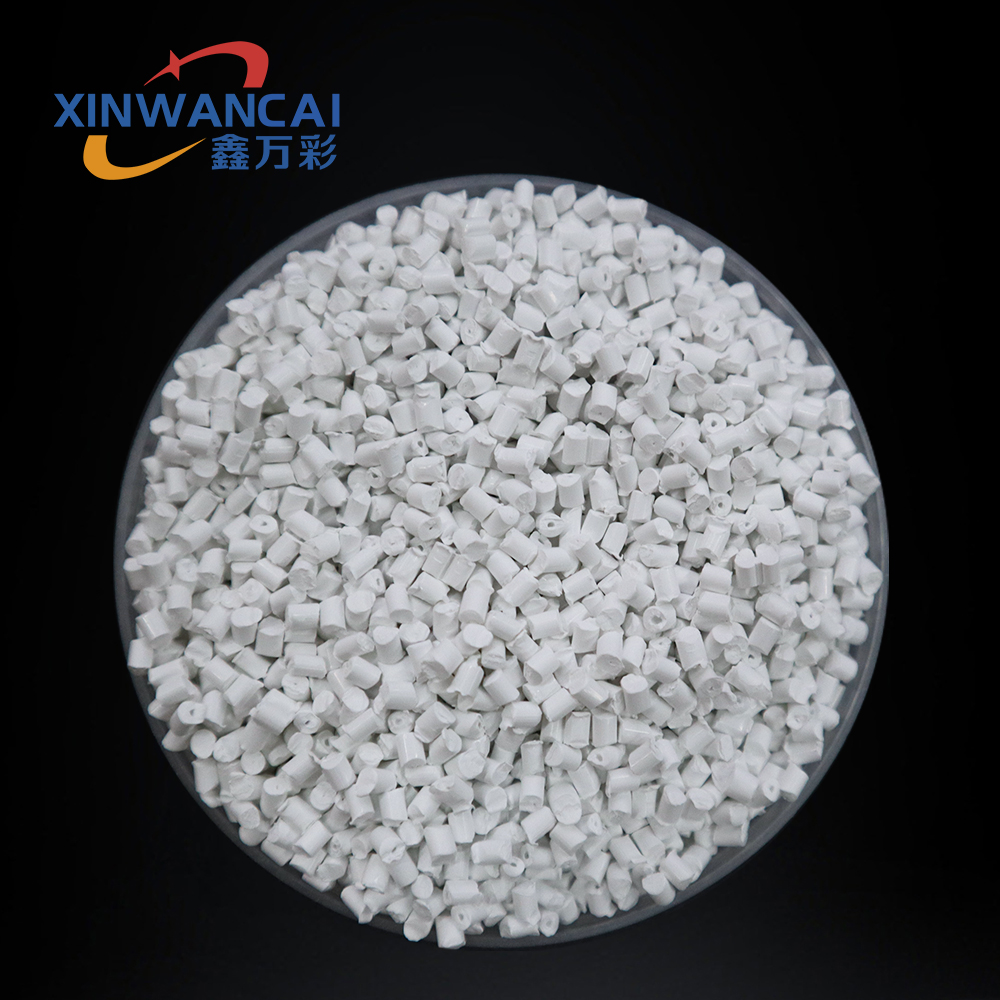
A lower upfront price on a dispersant or pigment often hides a much more expensive problem downstream. When dispersion quality is poor, particles clump together, viscosity drifts, and color strength drops. You end up adding more material to hit the same shade, reworking batches, or dealing with customer returns. The initial savings vanish quickly once you factor in the extra labor, waste, and lost production time.
Cost-effective dispersions, by contrast, are built around stability and consistency. The right dispersant chemistry keeps particles separated through shear, storage, and application, which means fewer formulation adjustments and less scrap. A slightly higher per-kilo cost can actually lower the total cost per finished unit when the batch is right the first time and the coating or ink performs as intended on the line. That is the real gap between something merely cheap and something genuinely cost-effective.
Troubleshooting Common CPP Film Defects Linked to Masterbatch Choice
Gels and fisheyes often trace back to a polymer carrier in the masterbatch that does not match the CPP base resin's melt flow or chemical structure. If the carrier is a low-MFI polyethylene while the cast film runs a high-MFI polypropylene, the masterbatch can stay partially unmelted, creating hard spots that tear through the thin web. Checking the carrier resin grade, raising the melt temperature slightly, and using a dispersing aid during compounding usually clear up most gel counts within a couple of roll changes.
Die lines and surface haze are frequently caused by pigment or filler agglomerates that survive the extrusion process. Tight screen packs help but do not fix the root issue if the masterbatch was made with oversized particles or insufficient wetting. Switching to a masterbatch with a finer particle size distribution and a carrier that matches the CPP grade often removes the streak pattern without adjusting the die lip or screw speed.
Bubbles, pinholes, and weak spots can appear when the masterbatch brings moisture or volatile processing aids into the throat of the extruder. Even a small amount of trapped moisture in a hygroscopic pigment or filler turns to steam inside the barrel, expanding into voids as the film leaves the chill roll. Pre-drying the masterbatch, verifying the supplier's moisture specification, and lowering the letdown ratio during the trial period help isolate whether the defect is truly masterbatch-related or a barrel temperature issue.
How Additive Packages Vary for High-Speed Lines vs. Thick-Gauge Film
High-speed extrusion lines subject the polymer melt to intense shear and a short thermal window, so the additive package leans heavily on processing aids and fast-acting surface modifiers. Fluoroelastomer-based polymer processing aids (PPAs) are common because they coat the die land, suppress sharkskin, and reduce die build-up at line speeds above 300 m/min. Slip agents like oleamide are chosen for their rapid bloom to the film surface before the web cools, while antioxidant and acid scavenger levels are often increased to offset the higher melt temperatures generated by shear heating.
Thick-gauge film cools much more slowly, giving additives extra time to migrate. This changes the selection logic: fast-blooming oleamide can over-migrate and create haze or transfer to downstream equipment, so higher molecular weight amides such as erucamide or behenamide are preferred at lower loadings. Antiblock packages also shift toward larger, softer particles or lower concentrations, because the thicker cross-section makes surface haze more visible and over-roughening can hurt clarity. Thermal stabilizers remain important, but the emphasis moves from shear protection to long-term heat aging and reduced plate-out on slow-turning chill rolls.
The difference also shows up in masterbatch design. High-speed lines require additives that disperse almost instantly at high let-down ratios, often using low-viscosity carriers that do not sacrifice melt strength. Thick-gauge lines can tolerate slightly higher carrier viscosity but need additives that resist exuding to the surface during the longer quench. As a result, a slip or antiblock masterbatch formulated for a 400 m/min thin-gauge line will rarely perform the same on a 1.5 mm sheet line without adjustment to the additive chemistry, loading, or both.
Lab Tests vs. Production Reality: What to Verify Before Scaling Up
Lab runs usually hide the messiness that full-scale batches expose. A reaction that stays uniform in a 500 mL flask can stratify or stall in a 2,000 L reactor because heat transfer drops and mixing dead zones appear. Before you commit to scale, track three things that rarely show up in bench notes: how long the vessel actually takes to reach target temperature, whether the stirrer creates consistent vortex depth across the full working volume, and how residue from the previous product interacts with your catalyst at higher metal surface ratios.
Material identity often shifts when suppliers change, even if the certificate of analysis looks identical. Test at least two incoming lots of each critical raw material under your intended production conditions, not just the lab-optimized ones. Also verify whether your filtration or centrifugation step behaves the same with ten times the solids load—filter cloth blinding and cake cracking don't scale linearly. A quick pilot run with the actual production-grade equipment, even at one-third scale, will reveal more than a month of bench experiments.
Finally, watch the things that never make it into the lab notebook: ambient humidity swings, operator timing between steps, and how long intermediates sit in transfer lines. These habits create batch-to-batch drift that only appears when you're no longer running everything yourself. Build a short checklist from a few shadowed production batches and compare each step's duration and temperature against your lab standard. That gap is where scaling failures hide.
When to Involve Your Masterbatch Supplier in Line Trials
Bring your masterbatch supplier into the conversation long before the first pellets hit the hopper—especially if you're shifting to a different base resin, lowering letdown ratios, or chasing a tight brand color. A quick review of dispersion behavior, carrier compatibility, and processing window at this stage can prevent hours of downtime later.
The clearest trigger is when a problem shows up that isn't obviously mechanical. If you're seeing streaking, specks, color drift from lot to lot, or plate-out on the die after only a short run, that's the moment to call your supplier. They can often pinpoint whether the issue is pigment loading, inadequate mixing, or a mismatch between the carrier resin and your process temperatures.
Also involve them before any major scale-up, especially on high-shear lines, thin-wall applications, or when you need the same color across multiple machines and sites. What works in a 25-kg lab batch can fall apart at 2,000 kg/hour; a supplier who knows your line speeds and residence times can recommend adjustments to masterbatch formulation before you commit to production quantities.
FAQ
Focus on the carrier resin first. For cast polypropylene film, a masterbatch built on a PP homopolymer or copolymer carrier will blend more evenly and reduce gel specks. Then check the pigment or additive loading—too high a loading often forces you to use more masterbatch than the line can handle, which hurts film clarity and seal integrity. Also ask for migration test data if the film contacts food; not all masterbatches are formulated for direct food contact under high heat.
Usually it's a dispersion problem. If the pigment wasn't milled properly or the carrier resin doesn't match the base PP melt flow, you get agglomerates that survive extrusion. This is worse with organic pigments and high-load white masterbatches. A quick trial on a lab cast line with a 50-micron film will show it faster than any datasheet. Also check moisture—damp masterbatch can create steam pockets that look like fisheyes.
Not really. High-clarity film needs particle size below roughly 5 microns and a carrier with a similar refractive index to the base resin. Matte or opaque film relies on larger particles or incompatible additives to scatter light. Trying to force one product into both roles usually ends up with haze in clear film or weak opacity in matte film. It's better to keep two separate masterbatches, even if it means more inventory.
Most white masterbatches with 50-60% TiO2 can run at 4-8% let-down ratio to get good opacity, but seal strength starts dropping if you exceed about 10%. The real key is the TiO2 grade and coating. A heavily coated rutile TiO2 disperses better and interferes less with heat sealing than uncoated anatase. Always run a seal curve test at your target film thickness before locking in the ratio.
Ask for a thermal stability test at your processing temperature, usually 230-260°C for CPP. Low-quality masterbatches use waxes or low-molecular-weight additives that volatilize and condense on the die lip. You want a masterbatch with a TGA weight loss below 0.5% at 250°C over 30 minutes. Also run a 4-hour continuous trial and inspect the die; if you see white or yellow deposits forming, switch suppliers.
Yes, but you need a synthetic silica or polymethyl methacrylate (PMMA) bead-based antiblock rather than natural silica. Synthetic beads have a narrow particle size distribution and a refractive index closer to PP, so they add less haze. For slip, use a masterbatch with a high-purity erucamide or oleamide that blooms slowly. Avoid overloading—usually 0.5-1.5% active slip agent in the final film is enough. Too much will cause haze and even hurt print adhesion.
Universal masterbatches often use a polyethylene or ethylene-vinyl acetate carrier to work in many resins, but that can create micro-phase separation in PP cast film. CPP-specific masterbatches use a PP carrier with a melt flow index close to your base resin, so the film loses less clarity and tensile strength. If your production runs PP homopolymer for rigid film, a universal batch will probably show more warpage and lower dart impact.
Indirectly, yes. Some pigments like carbon black or iron oxide can nucleate PP and change crystallinity, which may slightly reduce oxygen transmission. But the bigger effect comes from the carrier resin mismatch—if the masterbatch carrier is a lower molecular weight PP, it can create microvoids at high loadings, increasing permeability. For barrier film, keep colored masterbatch at the lowest ratio that gives consistent color, and test WVTR and OTR on the final film.
Conclusion
Choosing the right CPP film masterbatch rarely starts with the spec sheet. It starts with what the film will actually do. A masterbatch that runs beautifully in a 20-micron lamination film may fail in a 60-micron heavy-duty pouch, and vice versa. Before comparing loading levels or prices, map out the end-use demands: clarity for display packaging, low migration for food contact, heat resistance for retort, or controlled slip for high-speed form-fill-seal lines. Then look at dispersion. Poorly dispersed masterbatch shows up as fisheyes, die lines, or uneven COF, and those defects cost more in scrap and downtime than the price difference between a "cheap" concentrate and a well-made one. Real cost-effectiveness means consistent feeding, low screen-pack pressure rise, and batch-to-batch repeatability—not the lowest invoice price.
Common CPP defects like plate-out, poor hot tack, or film blocking often trace back to additive package mismatches. High-speed lines generate more shear and frictional heat, so they need thermally stable slip and antiblock systems that won't volatilize or degrade. Thicker gauge film, on the other hand, can trap low-molecular-weight additives and may require higher loadings or different carrier resins to keep COF stable over weeks of aging. Lab-scale dispersion tests and DSC data are useful, but they don't capture the residence time, melt temperature profile, or draw resonance of your specific line. Before scaling up, run the masterbatch on your actual extruder at production speed and monitor pressure, die buildup, and film appearance for at least a few hours. Involving the supplier early in line trials often shortens this loop—they can adjust carrier resin, additive ratio, or particle size to match your equipment, which is far more productive than troubleshooting after a failed production run.
Contact Us
Contact Person: JACK
Email: [email protected]
Tel/WhatsApp: 86 18650130917
Website: https://www.xinwancai.com/